

Les Très Riches Heures du Duc de Berry
Exhibitor
Universal Art Group | Verlag Müller & Schindler
Les Très Riches Heures du Duc de Berry is the most famous illustrated manuscript of the 15th century. After 1410, with additions made around 1485, a codex was created in France that is rightly considered one of the most beautiful manuscripts ever produced. In 121 incredible miniatures – including the world-famous calendar pages – a breathtaking panorama of the world of the 15th century unfolds, executed in brilliant colours and shining gold.
This fantastic manuscript, measuring 29 x 21 cm, has been published as a faithful facsimile edition thanks to the latest technologies and is limited to only 800 copies worldwide. The original is held in the Musée Condé in Chantilly (France) with the signature Ms. 65.
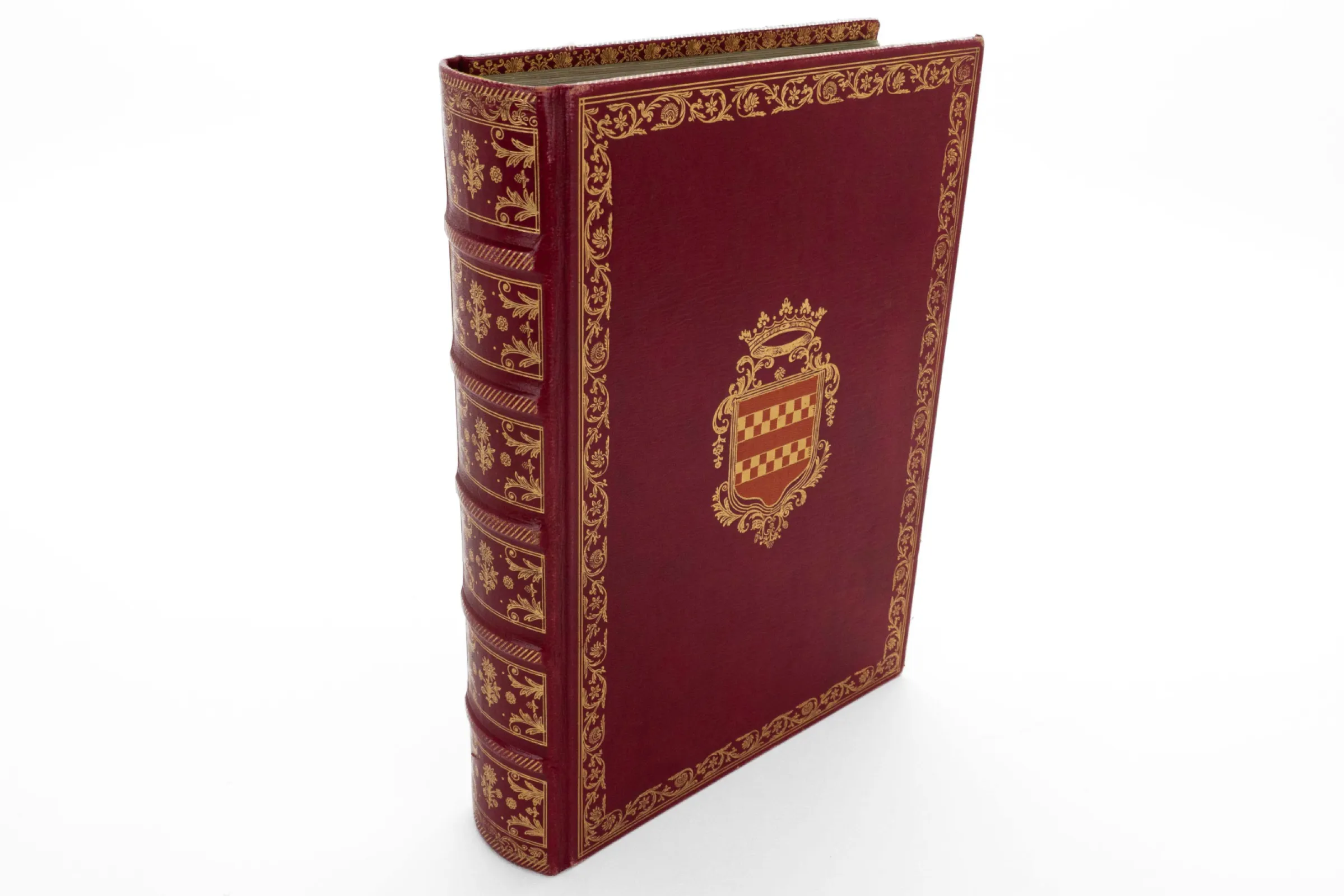
The cover of the original, a leather binding in elegant red with rich gold embossing, is reproduced true to the original – a true bibliophile‘s masterpiece. A luxury box protects this valuable edition.


Fol. 1v: Calendar Image for January. This January miniature offers a vivid glimpse into the residence of Duke John of Berry, where courtiers gather to present New Year’s gifts. The Duke, richly dressed in blue and gold, sits by the fire as nobles, clerics, and servants bustle around him. Heraldic emblems, sumptuous tapestries, precious tableware, and the Duke’s beloved dogs underscore his wealth and status. Above, the unfinished celestial arc shows Sol guiding the sun and the zodiac, a consequence of the work ceasing in 1416.

Fol. 8v: Calendar Image for August. This August calendar miniature shows an elegant party riding out for falconry, accompanied by a falconer and hunting dogs. Finely dressed riders—some sharing a saddle—carry falcons, while Étampes Castle rises behind them above fields where peasants harvest grain. Bathers cool themselves in a shimmering river, capturing the mood of a hot August day. Above, Sol guides the sun and the zodiac signs Leo and Virgo. The idyllic scene, painted by the Limbourg Brothers, contrasts with later, more realistic additions by Barthélemy d’Eyck.

Fol. 14v: The Homo Signorum – the Zodiac Man. This Zodiac Man concludes the calendar, illustrating the medieval belief that zodiac signs affected health and guided medical practice. An androgynous figure in a mandorla is shown front and back, each body part linked to its governing sign, from Aries on the head to Pisces at the feet. Surrounding bands mark zodiac months, days and seasons, while Duke John of Berry’s emblems appear in the corners. Created by the Limbourg Brothers, this innovative image reflects late medieval astrological medicine.

Fols. 64v-65r: The open book shows the Fall of the Rebel Angels. This dramatic miniature depicts the archangel Michael leading the heavenly host against Lucifer and the rebel angels, who plunge downward as they are cast from heaven. Typical of late medieval illumination, the scene contrasts the serene celestial realm above with the chaotic descent below, emphasising divine order triumphing over rebellion.

Fols. 113v-114r: The open book shows the illustration of Purgatory. This miniature, along with the accompanying decorated initials, was painted by Jean Colombe around 1485. The scene depicts souls undergoing purification, surrounded by flames and dramatic imagery, reflecting late medieval beliefs about the afterlife and the moral order, executed with Colombe’s detailed and expressive style.