
Universal Art Group | Verlag Müller & Schindler
About us
Universal Art Group (UAG) brings the world of art under one roof, combining tradition and innovation through master craftsmanship and state-of-the-art technologies. From the meticulous production of facsimiles and art books to bespoke merchandising, replicas, and digitisation using gigapixel technology, UAG supports museums and cultural institutions with expert publishing services, tailored projects, and international distribution.
Our mission is to preserve, curate, and disseminate art and cultural heritage across space and time. By fostering cross-cultural exchange, we make diverse artistic expressions accessible to audiences worldwide. Beyond publishing, UAG offers exhibition and content development services, creating bridges between institutions and the public.
With a multidisciplinary team devoted to excellence, UAG safeguards the legacy of the past while embracing modern innovation—ensuring that art continues to inspire, connect, and enrich future generations.
Because Culture Matters – Because Art Unites
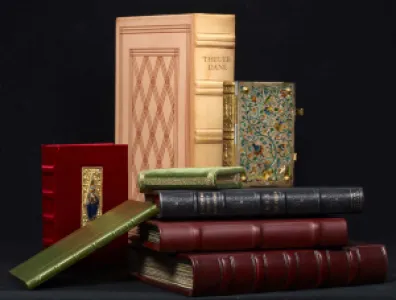
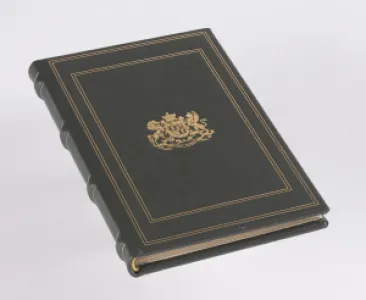
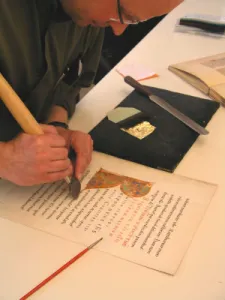
A facsimile is a faithful reproduction of a manuscript or book. It is essential that all visible characteristics of the original – such as colours, gold, silver, and signs of age or irregularities – are also visible in the facsimile. Facsimiles are generally produced in limited editions worldwide, highlighting their uniqueness and the value of each copy. But it is not only the technical and craftsmanship perfection that makes a facsimile special. It must also capture and convey the spirit and character of the original.

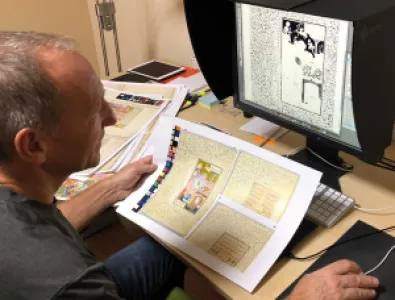
Once the digitisation is complete, we move on to the pre-press stage. In this step, the digital file is prepared for printing. Colours, contrasts, and details are finely adjusted to achieve the best possible result. Every step in pre-press is crucial to ensure that the facsimile matches the original perfectly.
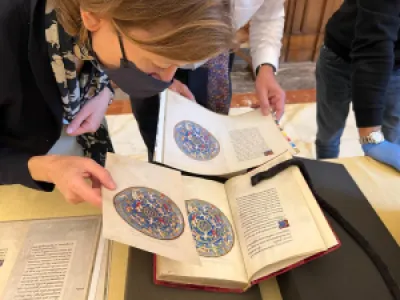
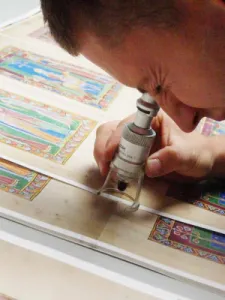
The proofing comparison is an important step in the production process. During this phase, the first print proof is compared with the original. Our experts examine every detail: colours, borders, texture, and quality. Only when everything matches perfectly can the printing process continue. Precision and perfection are the goals here!

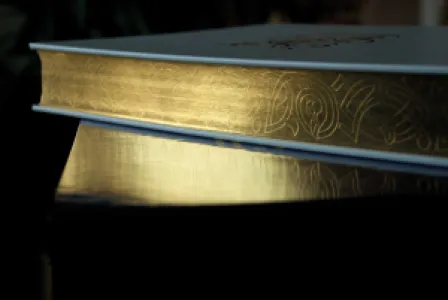
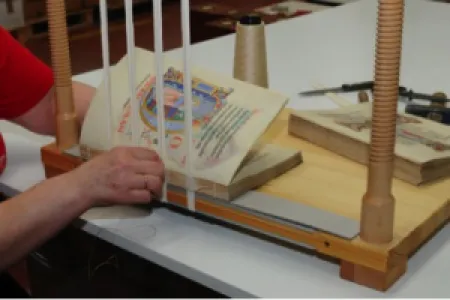
The next step is the bookbinding process, where each page is carefully assembled into a complete book. The cover is crafted, pages are sewn together, and the final touches are made with great care. This is how the printed facsimile is transformed into a true masterpiece, just like the original, ready to be held in your hands.
Address
Innstr. 7
84359 Simbach am Inn
Germany
E-mail: info@universalartgroup.com
Phone: +49 8571 926129
Internet: www.universalartgroup.com
14 Old Queen Str.
SW1H 9HP London
United Kingdom
E-mail: info@kulturalis.com
Phone: +44 7790 839637
Internet: www.kulturalis.com
Contact person:
Alexander Wilhelm
COO Universal Art Group, SVP Verlag Müller & Schindler
E-mail: wilhelm@universalartgroup.com
Phone: +43 664 2242648
Products & Services
Tradition & Innovation: Craftmanship combined with state-of-the-art technology
Digitisation: Gigapixel technology
Expert Publishing Services: Tailored projects for your institution, and international distribution
Cross-Cultural Exchange: Disseminating art and cultural heritage
Facsimiles – Art Books – Merchandising – Replicas – Digitisation – Exhibition & Content Development
Les Très Riches Heures du Duc de Berry
Les Très Riches Heures du Duc de Berry is the most famous illustrated manuscript of the 15th century. After 1410, with additions made around 1485, a codex was created in France that is rightly considered one of the most beautiful manuscripts ever produced. In 121 incredible miniatures – including the world-famous calendar pages – a breathtaking panorama of the world of the 15th century unfolds, executed in brilliant colours and shining gold.
This fantastic manuscript, measuring 29 x 21 cm, has been published as a faithful facsimile edition thanks to the latest technologies and is limited to only 800 copies worldwide. The original is held in the Musée Condé in Chantilly (France) with the signature Ms. 65.
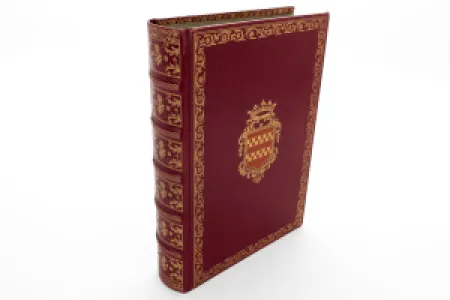

Fol. 1v: Calendar Image for January. This January miniature offers a vivid glimpse into the residence of Duke John of Berry, where courtiers gather to present New Year’s gifts. The Duke, richly dressed in blue and gold, sits by the fire as nobles, clerics, and servants bustle around him. Heraldic emblems, sumptuous tapestries, precious tableware, and the Duke’s beloved dogs underscore his wealth and status. Above, the unfinished celestial arc shows Sol guiding the sun and the zodiac, a consequence of the work ceasing in 1416.

Fol. 8v: Calendar Image for August. This August calendar miniature shows an elegant party riding out for falconry, accompanied by a falconer and hunting dogs. Finely dressed riders—some sharing a saddle—carry falcons, while Étampes Castle rises behind them above fields where peasants harvest grain. Bathers cool themselves in a shimmering river, capturing the mood of a hot August day. Above, Sol guides the sun and the zodiac signs Leo and Virgo. The idyllic scene, painted by the Limbourg Brothers, contrasts with later, more realistic additions by Barthélemy d’Eyck.

Fol. 14v: The Homo Signorum – the Zodiac Man. This Zodiac Man concludes the calendar, illustrating the medieval belief that zodiac signs affected health and guided medical practice. An androgynous figure in a mandorla is shown front and back, each body part linked to its governing sign, from Aries on the head to Pisces at the feet. Surrounding bands mark zodiac months, days and seasons, while Duke John of Berry’s emblems appear in the corners. Created by the Limbourg Brothers, this innovative image reflects late medieval astrological medicine.

Fols. 64v-65r: The open book shows the Fall of the Rebel Angels. This dramatic miniature depicts the archangel Michael leading the heavenly host against Lucifer and the rebel angels, who plunge downward as they are cast from heaven. Typical of late medieval illumination, the scene contrasts the serene celestial realm above with the chaotic descent below, emphasising divine order triumphing over rebellion.

Fols. 113v-114r: The open book shows the illustration of Purgatory. This miniature, along with the accompanying decorated initials, was painted by Jean Colombe around 1485. The scene depicts souls undergoing purification, surrounded by flames and dramatic imagery, reflecting late medieval beliefs about the afterlife and the moral order, executed with Colombe’s detailed and expressive style.
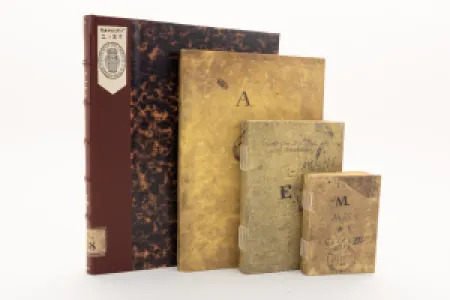
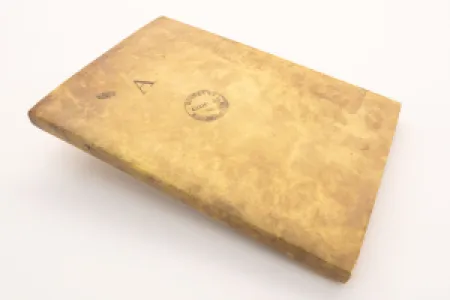
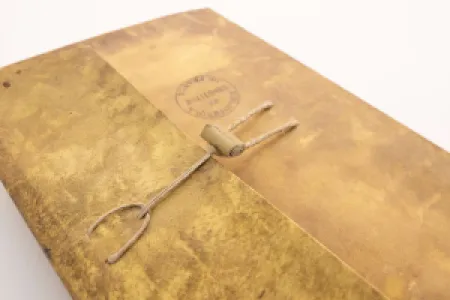
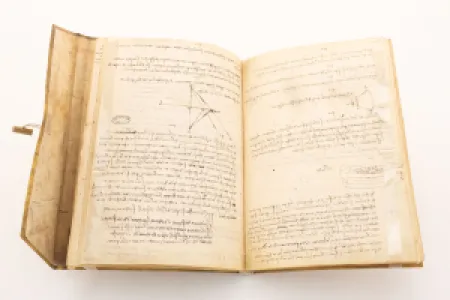
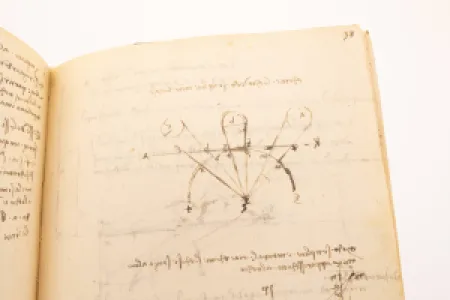
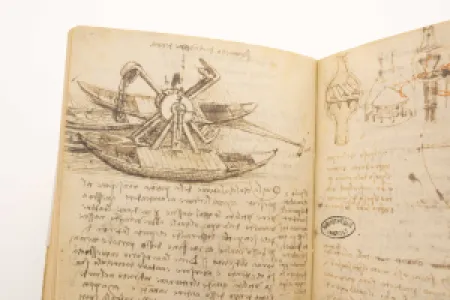
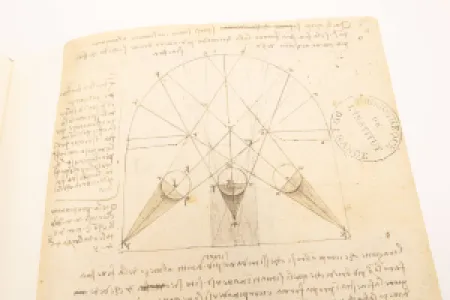
The Twelve Paris Sketchbooks of The Parisian Sketchbooks by Leonardo da Vinci - personal ideas of the great universal genius
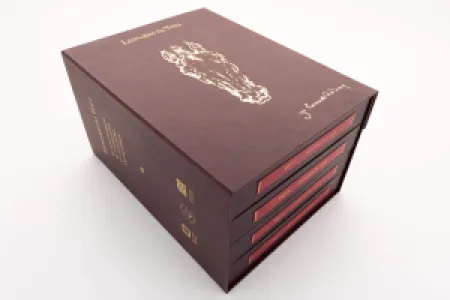
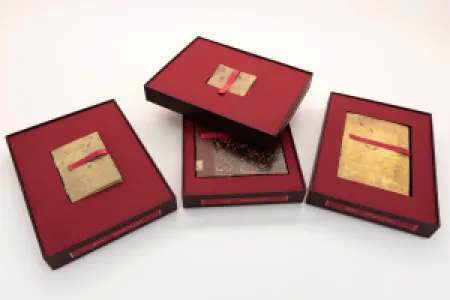
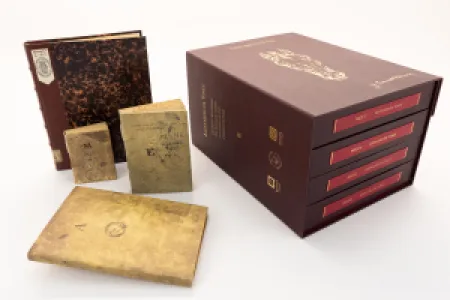
Step into the brilliant mind of Leonardo da Vinci: The 12 Paris Notebooks and their two supplement volumes from the Institut de France are now available as a meticulous facsimile edition – strictly limited to 990 copies worldwide. This monumental project is divided into four series, three of which have already been published.
Five-hundred years after the death of one the greatest geniuses of all times, our publishing house issues a unique testimony of Leonardo da Vinci’s creations and ideas which allows you to immerse in the thoughts of this great Renaissance Man.
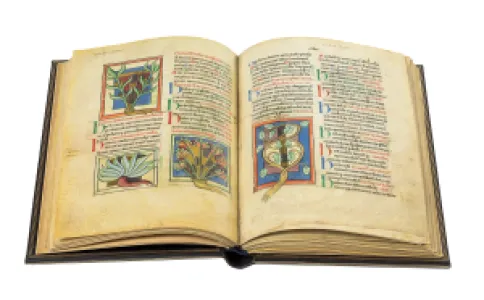
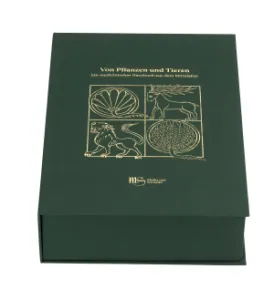
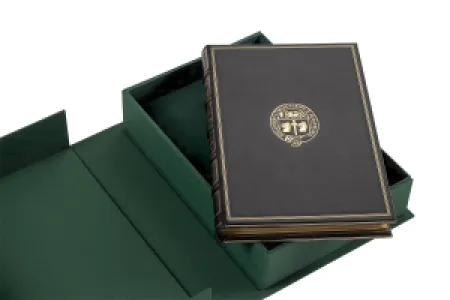
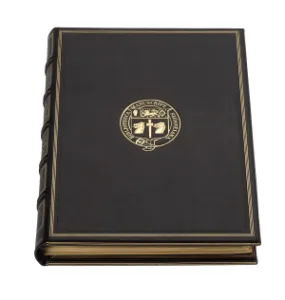
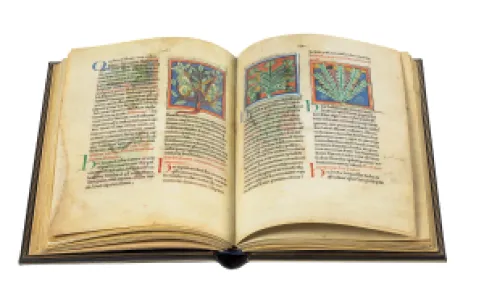
About Plants and Animals – A medical house book from the Middle Ages
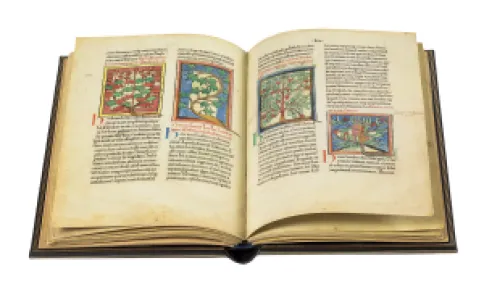
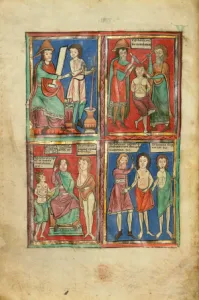
During the third quarter of the 12th century, unknown artists in Northern France or England created a fascinating manuscript: a medical house book, which is now published for the first time as a perfect and faithful facsimile edition, limited to 900 copies worldwide. The original is held under the signature Sloane MS 1975 in the British Library in London.
Our manuscript offers a unique testimony of its time, not only from the point of view of medicine, pharmacology and the history of science, but also with regard to the history of mentalities and history of art. More than 240 skilfully executed illustrations, which offer an exceptional insight into the knowledge of the era, display plants, animals and medical treatment methods, converting each image into a little work of art, full of colours and splendidly decorated with gold and silver. The strongly stylised illustrations of plants, some of them almost arabesque-like, are found on nearly every page of the compendium, and together with the wonderful depictions of animals make this manuscript a unique gem of medieval book art.
Engelbert of Nassau’s Book of Hours
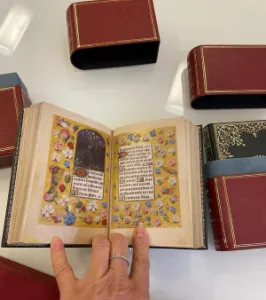
In the 1470s, one of the most extraordinary and remarkable Books of Hours of the Middle Ages was created in Burgundy. The miniatures, crafted by the renowned Master of Mary of Burgundy, along with countless decorative details—flowers, vines, and hundreds of birds—give the manuscript its unique character.
This delicate manuscript, with almost 300 leaves, has been divided into two volumes since the 18th century. The facsimile edition faithfully reproduces the manuscript in its current state and strictly limited to 900 copies worldwide. The original manuscript is held under the signature MSS. Douce 219/220 in the Bodleian Library in Oxford.
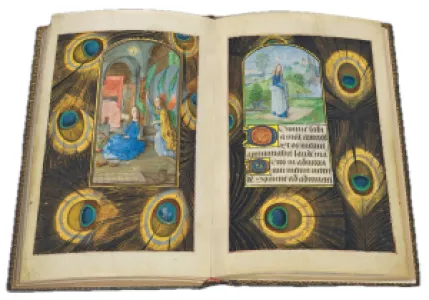
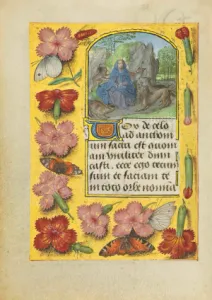
Fol. 36v: Antonius Abbas is resting at the foot of a rock, inquisitive wild animals have gathered around him, and a pig – often depicted together with him – is looking up at him from the left foreground. The miniature above the saint’s suffragium is surrounded on all sides by a trompe-l’oeil border, which had not originally been present but was added later to accommodate changes in the sense of style. Blossoms and buds appear to be strewn on the golden backdrop, on which they also cast shadows.
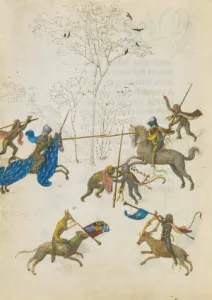
Fol. 132v: Here we are witnessing a fantastic tournament: the monkey riding the unicorn with the “e” of Engelbert of Nassau on its saddlecloth is jousting with another contestant on horseback. A fox on a ram and a wild man riding a stag are blowing trumpets adorned with flags – that on the left bears the subsequently added coat of arms of Duke Philip the Handsome. Four squires – wild men and monkeys – are excitedly attending the joust on foot and have further lances at the ready in case the first two should splinter.
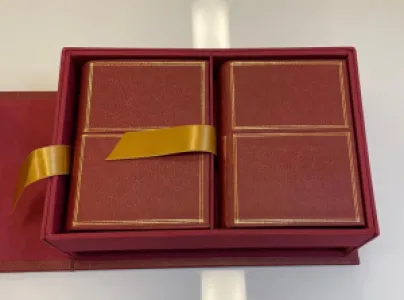
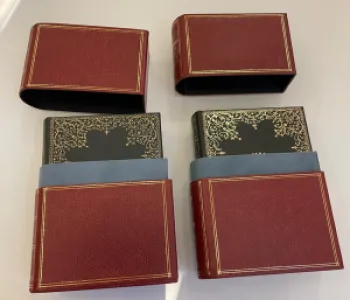
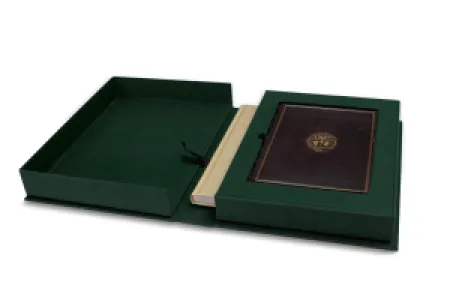
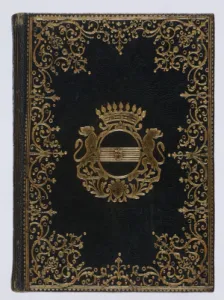
The manuscript, divided here into two volumes, is bound in a magnificent leather cover with lavish gold embossing. The manuscript has been divided into two volumes since the 18th century; this is faithfully reproduced in the present edition. Bound in genuine leather with lavish gold embossing, the volumes are protected by red leather sheaths, likewise with gilt embossing, and delivered in an elegantly luxurious box.
Codex Cocharelli
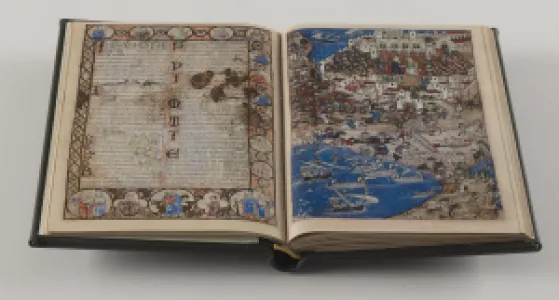
A famous Genoese merchant family has created a wonderful monument to itself in this little book. The manuscript is remarkable for its unique artistic quality and its content, which reflects the turbulent political and economic history of Europe. In times of Mongol and Islamic threats, fragile intra-European power structures, the end of the Crusader states and lively trade between Europe and the Far East along the Silk Road, the experiences of this Genoese merchant family exemplify the history of Europe and Italy at that time.
The Codex Cocharelli was written between 1325 and 1335 and is now preserved in six fragments scattered across the globe, which have now been reunited in this facsimile edition. The original parts of the manuscript are held at the British Library in London (MS Add. 27695, MS Add. 28441, MS Egerton 3127 and MS Egerton 3781), the Museo Nazionale del Bargello in Florence (MS inv. 2065 Carrand) and the Museum of Art in Cleveland (Wade Fund, MS n. 1953.152). The facsimile edition is strictly limited to only 1,000 copies worldwide.
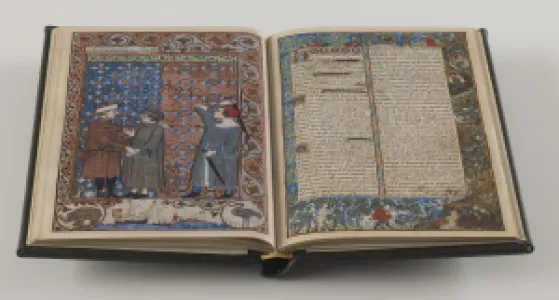
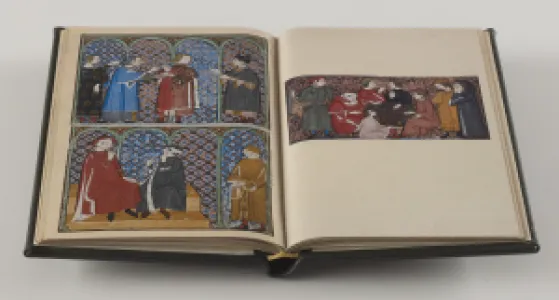
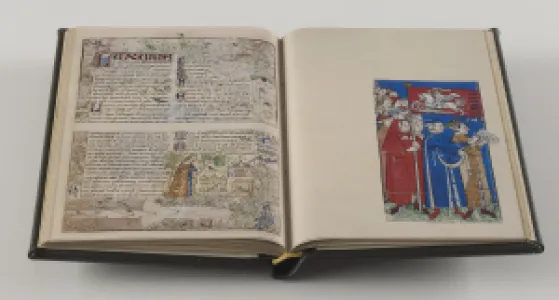
The frame text is a didactic text about vices and virtues, which aims to give the reader a deeper understanding through individual examples. The examples are mostly events from the time when the manuscript was written, making it a great source for history and politics, but also art and natural sciences.